Chrysler Crossfire – A Bold and Unusual Sports Coupe with Mercedes Engineering
The Chrysler Crossfire is one of the most distinctive and unusual sports cars of the early 2000s. Built during the collaboration between Chrysler and Mercedes-Benz, the Crossfire combined American styling with German engineering. The result was a compact luxury coupe (and later convertible) that stood out for its dramatic design and unique proportions.
Produced between 2003 and 2007, the Crossfire remains a niche but memorable car in automotive history. While it was not a sales blockbuster, it developed a loyal following thanks to its styling, exclusivity, and shared components with Mercedes-Benz models.
🚗 Origins of the Chrysler Crossfire
The Crossfire was born from the DaimlerChrysler era, when Chrysler and Mercedes-Benz were part of the same corporate group.
The idea was simple:
- Combine American design creativity
- Use Mercedes-Benz engineering reliability
- Create a premium sports car at a competitive price
The Crossfire was first shown as a concept car in 2001, and due to strong public interest, it was quickly approved for production.
🎨 Exterior Design – Love It or Hate It
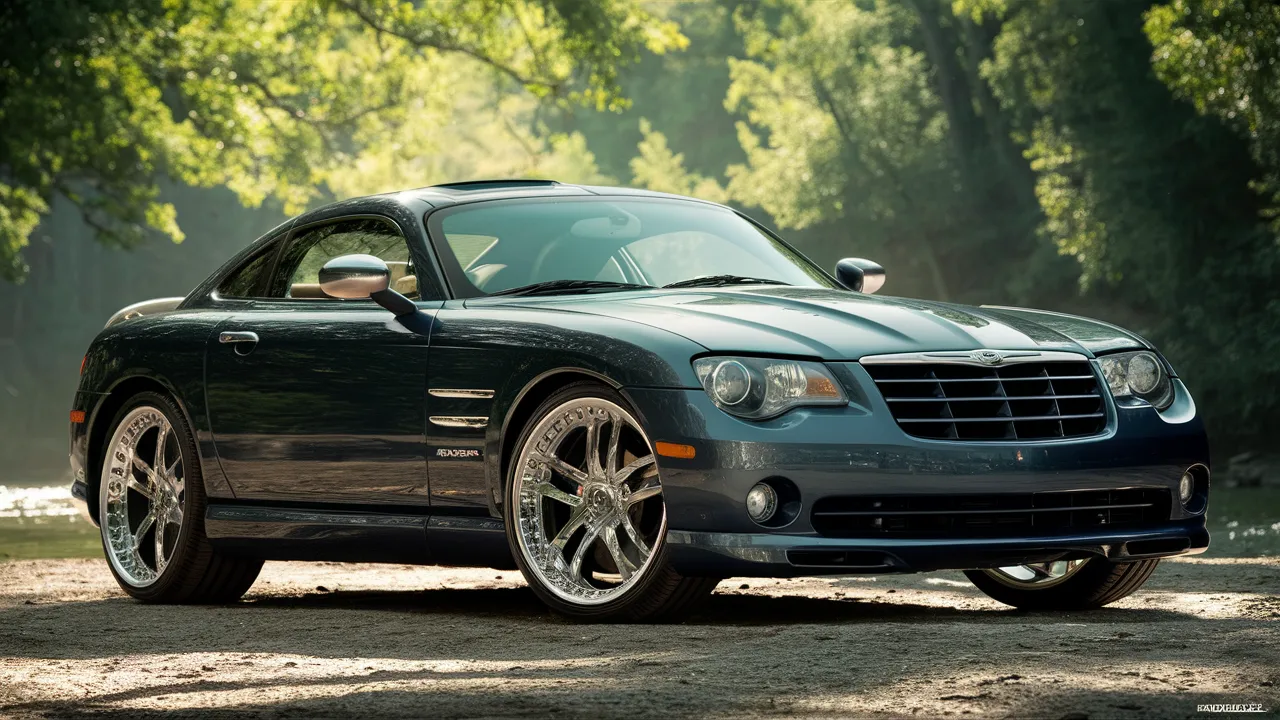
One of the most talked-about aspects of the Crossfire is its design. It is instantly recognizable and highly unconventional.
Key exterior features:
- Long hood with short rear deck
- Distinctive “split” rear window design
- Wide rear fenders
- Retro-inspired side vents
- Low, wide stance
The styling was influenced by art deco and classic American design themes, giving the car a sculpted and dramatic appearance.
However, opinions were divided:
- Some praised it as bold and futuristic
- Others criticized it as awkward or unusual
Regardless, the Crossfire ensured it never blended into traffic.
⚙️ Mercedes-Benz Engineering
Although branded as a Chrysler, much of the Crossfire’s mechanical foundation came from Mercedes-Benz.
It shared components with the Mercedes-Benz SLK-Class R170, including:
- Engine options
- Transmission systems
- Suspension components
- Chassis architecture
This German engineering provided the Crossfire with solid reliability and refined driving characteristics.
🔧 Engine and Performance
The Chrysler Crossfire was not designed to be an extreme performance sports car, but rather a balanced grand tourer.
Engine options:
- 3.2-litre V6 engine (naturally aspirated)
- Around 215 horsepower in standard models
- Around 330 Nm of torque in later versions
Performance:
- 0–100 km/h in approximately 6–7 seconds
- Top speed around 240 km/h (varies by model)
Later, Chrysler introduced a Crossfire SRT-6 version with significantly more power and performance tuning.
⚡ Chrysler Crossfire SRT-6
The performance-focused version, the Chrysler Crossfire SRT-6, was developed by Mercedes-AMG.
Upgrades included:
- Supercharged 3.2-litre V6
- Around 330 horsepower
- Faster acceleration (0–100 km/h in under 5 seconds)
- Sport-tuned suspension
- Upgraded brakes
The SRT-6 transformed the Crossfire from a stylish cruiser into a genuinely fast sports coupe.
🛋️ Interior Design and Cabin Feel
The interior of the Crossfire was heavily influenced by Mercedes-Benz design of the early 2000s.
Interior features:
- Leather-trimmed seats
- Simple dashboard layout
- Circular air vents
- Solid build quality
- Compact cabin space
While the interior was well-built, it was often criticized for feeling slightly dated even when new. The design prioritized functionality over modern luxury.
🧭 Driving Experience
The Crossfire was designed to offer a comfortable yet sporty driving experience.
On-road characteristics:
- Stable highway cruising
- Firm suspension setup
- Precise steering response
- Rear-wheel-drive layout
The car felt more like a grand tourer than a pure sports car, making it suitable for long-distance driving.
Handling:
- Balanced weight distribution
- Good grip in dry conditions
- Predictable cornering behavior
However, the firm suspension could feel stiff on rough roads.
📉 Market Reception
When it launched, the Crossfire received mixed reviews.
Positive feedback:
- Unique and bold design
- Strong Mercedes engineering
- Good performance for its class
- Affordable entry into luxury sports cars
Criticism:
- Limited interior space
- Unusual styling not to everyone’s taste
- Not as sporty as rivals
- Heavy reliance on older Mercedes components
Despite this, it maintained a loyal fan base.
🆚 Competitors in the Segment
The Crossfire competed with several sports coupes of its era.
Main rivals included:
- BMW Z4 (E85)
- Audi TT Mk1
- Porsche Boxster (986)
Compared to these competitors:
- It was less sporty than Porsche
- Less refined than BMW in driving dynamics
- More distinctive in design than Audi TT
Its uniqueness was its strongest selling point.
🔧 Reliability and Ownership
Thanks to Mercedes engineering, the Crossfire is generally considered reliable.
Ownership strengths:
- Solid mechanical components
- Reasonable maintenance compared to European rivals
- Strong engine durability
- Stable long-term performance
Potential issues:
- Aging interior materials
- Limited cabin space
- Electrical wear in older models
- Parts availability can be inconsistent
Overall, it is considered a relatively dependable used sports car.
🧠 Why the Crossfire Was Unique
The Chrysler Crossfire stands out because it was a rare collaboration between American design and German engineering.
It represented:
- A global automotive partnership
- Experimental design direction
- A niche sports car approach
Few cars from that era looked or felt like the Crossfire.
📅 Production and End of Life
Production of the Crossfire ended in 2007 due to:
- Declining sales
- Shift in Chrysler strategy
- End of DaimlerChrysler partnership
Although its production life was short, it left a lasting impression in automotive design discussions.
🌟 Legacy of the Chrysler Crossfire
Today, the Crossfire is remembered as:
- A bold design experiment
- A symbol of early 2000s automotive styling
- A rare blend of Chrysler and Mercedes engineering
It is not considered a mainstream classic sports car, but it has developed cult status among enthusiasts who appreciate its uniqueness.
🧾 Conclusion
The Chrysler Crossfire remains one of the most distinctive cars produced by Chrysler during its collaboration with Mercedes-Benz. With its bold design, solid engineering, and unusual character, it continues to stand out in automotive history.